A.I. Maps Subtle Pancreas Changes Linked to Type 2 Diabetes
Updated: Oct 15
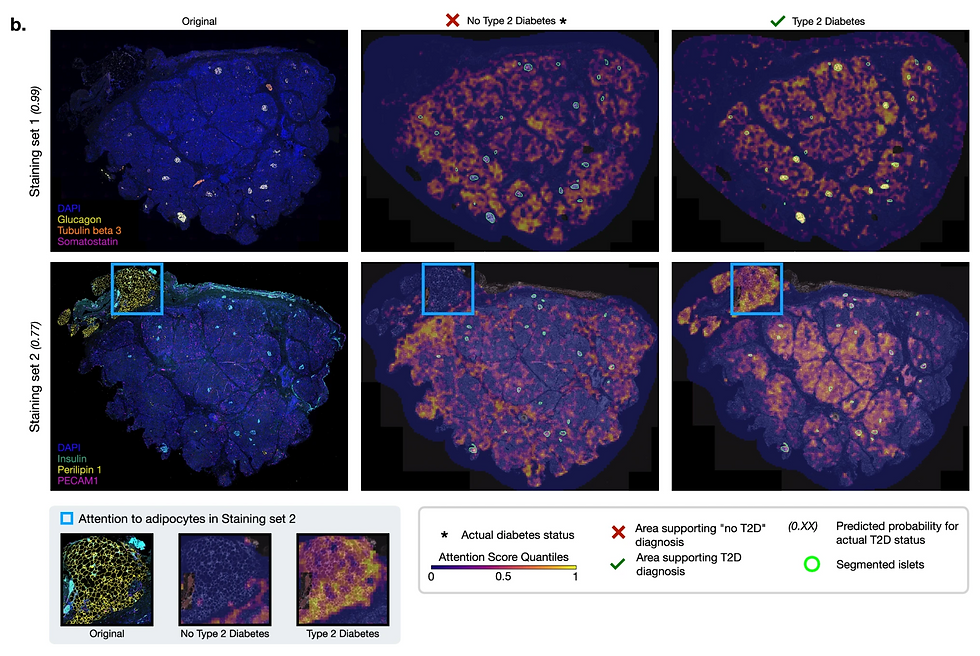
Scientists say they are using artificial intelligence (AI) to discover tiny changes in the pancreas that may help explain how type 2 diabetes develops — and how we might detect it earlier. A research team from the German Center for Diabetes Research and collaborators trained AI to spot subtle differences in human pancreatic tissue that would be difficult for the human eye to see.
Let’s break this down in a way that’s easy to understand.
What Does the Pancreas Do?
The pancreas is an organ located behind your stomach. It plays a huge role in blood sugar control. Inside the pancreas are tiny clusters of cells called islets. These islets contain beta cells, which make insulin.
Insulin is the hormone that:
Moves sugar (glucose) from your bloodstream into your cells
Keeps blood sugar levels in a healthy range
In type 2 diabetes, the body either:
Doesn’t respond well to insulin (called insulin resistance), or
Doesn’t produce enough insulin
Over time, this leads to high blood sugar levels. Type 2 diabetes (T2D) is a chronic disease affecting around 500 million people worldwide.
The Problem: Subtle Changes Are Hard to See
Doctors and scientists have studied pancreatic tissue under microscopes for years. But some of the earliest changes linked to type 2 diabetes are extremely small and subtle.
These changes can include:
Slight differences in the structure of islets
Small shifts in how cells are arranged
Early damage that doesn’t look dramatic
The human eye may miss patterns that are buried in thousands of tiny data points.
That’s where AI comes in.
How AI Helps
Researchers used artificial intelligence to analyze detailed images of human pancreatic tissue.
Instead of just “looking” at the slides, the AI:
Scanned thousands of microscopic images
Measured patterns in cell shape and structure
Compared tissue from people with and without type 2 diabetes
Identified subtle differences that humans might overlook
The AI system was able to detect structural changes linked to type 2 diabetes that are difficult to quantify manually.
Why This Matters
This kind of research could lead to:
1. Earlier Detection
If doctors can recognize tiny structural changes earlier, they might identify people at risk before blood sugar levels become dangerously high.
2. Better Understanding of Disease Progression
Scientists can better understand how the pancreas changes over time in type 2 diabetes.
3. Personalized Treatment
AI tools may eventually help doctors tailor treatment plans based on how a person’s pancreatic tissue is changing.
Why AI Is So Powerful in Medicine
AI is especially useful in medicine because it can:
Process huge amounts of data quickly
Detect patterns invisible to humans
Reduce bias in visual analysis
Continuously improve as it analyzes more data
In this case, it’s not replacing doctors — it’s giving them a stronger microscope.
The Big Picture
Type 2 diabetes affects millions of people worldwide. By combining biology and artificial intelligence, scientists are uncovering new clues about how the disease develops at a microscopic level.
While this research is still developing, it shows how technology could transform how we diagnose and treat chronic diseases in the future.
About Direct Diabetes
Direct Diabetes has been helping people with diabetes for nearly 30 years by mailing the supplies they need directly to their home, and helping them avoid the hassle of having to go to a pharmacy. From Continuous Glucose Monitors (CGMs) to insulin pumps and testing supplies, our goal is to take the stress out of managing diabetes so patients can focus on living healthier, fuller lives. We work directly with doctors and insurance companies to make the process simple and affordable.
📞 Contact Us: 480-998-5551
🌐 Website: DirectDiabetes.com
📲 Follow Us:
This content is for informational purposes only and should not be taken as medical advice. Always consult a qualified healthcare provider about any questions or concerns regarding your health or treatment options.



Comments